In addition to a daily activity device, prosthetic and orthotic users need specialized devices for activities like running or playing sports—which are often not covered by insurance. Advocates, including University of Hartford faculty and students, are pushing to change that.
"Insurers should not be able to deny a benefit for an individual with limb loss or limb difference that would be covered for a person without a disability seeking to perform the same activity," said Lindi Mitsou, associate professor of prosthetics and orthotics. Mitsou is also co-lead of the organization So Every BODY Can Move CT, which is urging the passage of a bill to expand prosthetic and orthotic coverage. 12 other states already have such laws on their books.
“Access to advanced prosthetic and orthotic technology can be life-changing for both physical and mental health,” said Mitsou. “We are encouraged to see Raised Bill HB 5374 move forward and hope it will pass to ensure children, adults, and veterans with limb loss and limb difference can access the devices they need to live active, independent lives."
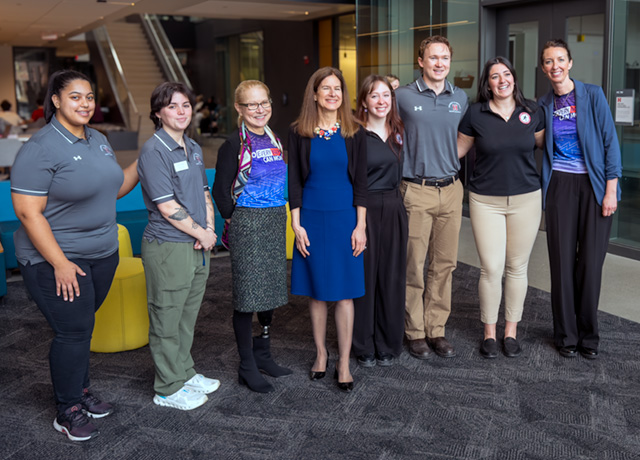
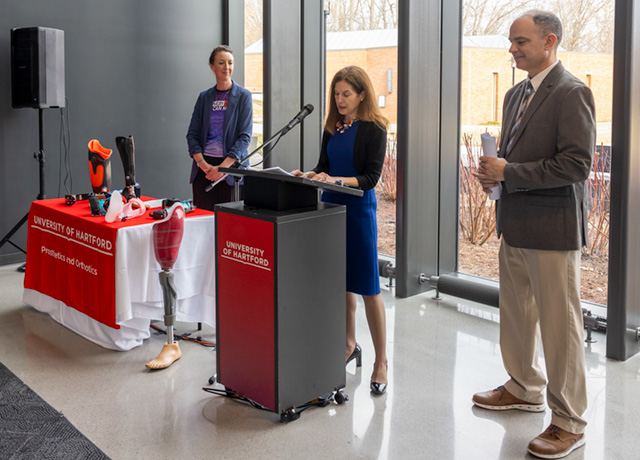
The effort drew Lieutenant Governor Susan Bysiewicz to campus this week. In a press event at the Francis X. and Nancy Hursey Center for Advanced Engineering and Health Professions, Bysiewicz heard from faculty and students from UHart’s College of Education, Nursing, and Health Professions, as well as individuals living with limb loss.
Lindi Mitsou, Associate Professor of Prosthetics and OrthoticsAccess to advanced prosthetic and orthotic technology can be life-changing for both physical and mental health ... insurers should not be able to deny a benefit for an individual with limb loss or limb difference that would be covered for a person without a disability seeking to perform the same activity.
Advocates highlighted current policy where insurers frequently override doctors’ recommendations by labeling certain prosthetic and orthotic devices as “not medically necessary,” limiting individuals to a single basic daily device even when it does not allow full participation in school, work, or sports.
These limitations also affect veterans who receive insurance through their employers outside of the VA system. As a result, veteran and civilian patients are often forced to choose between incurring prohibitive out-of-pocket costs, risking injury when using ill-fitting or improper devices, or adopting a more sedentary lifestyle – which can lead to physical and mental health complications.
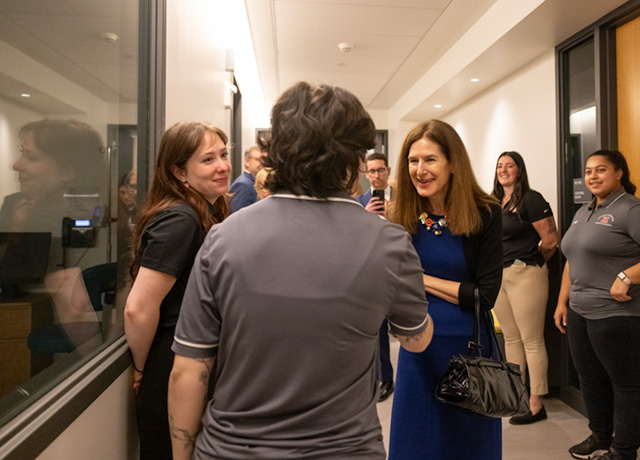
After the news conference, Bysiewicz toured some of the Hursey Center’s health care classrooms and labs to learn about the unique design, function and clinical requirements of activity-specific devices. UHart’s program is one of only 14 in the country offering graduate-level clinical education in the design, fabrication, and fitting of prostheses and orthoses.