Apply

Academic Distinction
& Innovation

Main Content

Preparing Leaders for a Changing World

Leveraging UHart's strengths in interdisciplinary learning, creativity, technology, and real-world experience to develop graduates who can lead through change and navigate complexity.

Defining Pillar Two

The University of Hartford's future will be shaped by the distinctive ways we connect knowledge, creativity, technology, and human potential. Few institutions possess the breadth of disciplines, close faculty-student relationships, and regional partnerships that define UHart. These strengths position us to become a national model for interdisciplinary, career-connected, and human-centered education.

Education for What's Next.

Our vision is not simply to prepare students for existing professions. It is to prepare them to lead through change, navigate complexity, and solve challenges that do not yet exist. To achieve this vision, we will deepen interdisciplinary collaboration, expand experiential learning, strengthen connections between academia and practice, and thoughtfully embrace emerging technologies through a framework grounded in ethics, creativity, and human responsibility.

The future demands graduates who can work across disciplines, communicate effectively, think critically, and leverage technology with wisdom and integrity. UHart will be known for developing these leaders.

At UHart, we are preparing students for lasting careers through interdisciplinary research and problem-solving in real-world contexts. Intentionality transforms student potential into career-ready leadership and powerful community impact.''

Nancy LaGreca, Provost and Vice President of Academic Affairs

Our Six Goals for Strategic Action

Each of the six goals outlined in Excellence Reimagined will establish the University of Hartford as a beacon of ensured excellence and sustained success by 2031. 

Goal 1: Advance Innovative Interdisciplinary Programs and Pathways

Core aim: Building on key academic advantages, create innovative programs of distinction that capitalize on UHart’s strengths to deliver an integrated, comprehensive educational experience.

  1. Develop interdisciplinary programs through new or existing academic offerings, working across school and college courses, majors, minors, and certificates, for all student populations.
  2. Develop and launch new interdisciplinary graduate and non-degree programs and pathways.
  3. Create structures and incentives that facilitate interdisciplinary or cross-college collaboration.
  4. Overhaul advising protocols to support interdisciplinary pathways and professional preparedness.

Goal 2: Amplify Experiential Learning and Career Readiness as a Defining Institutional Advantage

Core aim: Embed experiential learning and career preparation into every student’s academic journey, ensuring that all graduates can successfully navigate, contribute to, and progress through evolving professional pathways responsive to ever-changing workforce deman

  1. Ensure that every undergraduate and graduate student completes a high-impact applied learning experience that bridges theory and practice and distinguishes their degree.
  2. Build and scale a robust ecosystem of internships, co-ops, undergraduate/graduate research, creative activity, service learning, and community-engaged experiences—anchored by deep, sustained employer and industry partnerships.
  3. Position faculty–student collaboration as a hallmark of the academic experience, expanding opportunities for mentored research, innovation, and artistic production aligned with emerging workforce needs and student aspirations.
  4. Integrate career readiness throughout the curriculum and co-curricular activities, leveraging coordinated programming, leading-edge platforms (e.g., Handshake, Parker Dewey, Big Interview), and embedded, school-based support models.
  5. Expand UHart’s comprehensive, lifelong career development network to perpetually attract graduate students and alumni and foster professional advancement, adaptability, and growth.

Goal 3: Strengthen the Bridge Between Academia and Practice

Core aim: Ensure teaching and scholarship remain relevant, applied, and connected to societal needs.

  1. Ensure programs anticipate and meet market needs and create relevant pathways for students.
  2. Position faculty and staff as resources for industry and community partners.
  3. Link academic research with real-world applications.
  4. Create faculty residencies or fellowships in external organizations and community partners.
  5. Enhance civic engagement and service-learning initiatives across all schools and colleges.

Goal 4: Expand Graduate Programs, Lifelong Learning, Micro-Credentials and Stackable Pathways

Core aim: Serve learners at every stage of their careers with modular, accessible educational options.

  1. Strategically grow graduate, nondegree, micro-credential, and certificate offerings.
  2. Develop stackable credentials aligned with regional industry needs.
  3. Co-create programs with external partners in industry, non-profit, and government.
  4. Support advising and teaching models for flexible learning pathways.
  5. Increase collaboration between graduate education programs and staff and the Enrollment Management division to streamline admissions processes and increase enrollment at all levels.

Goal 5: Establish Human-Centered and Innovative Learning Environments, Including AI-Integration Technology Hub

Core aim: Position the university as a model for the adoption of responsible, ethical, human-centered AI and emerging technologies in teaching, learning, and student preparation.

  1. Prioritize human-centered values and sensibilities in the development of institutional guidelines for AI and emerging technologies that keep faculty, staff, and students grounded, educated, and accountable.
  2. Establish a Technology Hub with focused resources for a dedicated AI Center to support faculty usage of AI within their discipline as appropriate.
  3. Build AI literacy and proactively shape its role in teaching and learning.
  4. Upgrade infrastructure and classroom technology to scale instruction in AI fluency, facilitate cutting-edge research, innovative experimentation, and external partnerships.
  5. Invest in faculty development for AI and emerging technologies at the course and program level.

Goal 6: Deepen Civic, Community, and Regional Engagement

Core aim: Enhance the university’s visibility and recognition as a regional partner and civic leader.
  1. Strengthen partnerships with nonprofits, corporations, government, and other institutions across education, research, service learning, economic development, and cultural initiatives.
  2. Deepen UHart’s community presence through board service, community forums, and key initiatives that directly impact our region.
  3. Centralize and coordinate community engagement initiatives, amplifying existing initiatives and bringing more people to campus.
  4. Publish and broadly share an annual social impact report that captures UHart’s community engagement and contributions.
  5. Pursue Carnegie Anchor Institution designation, recognizing UHart’s commitment to investment in the Greater Hartford region.

Measuring Success

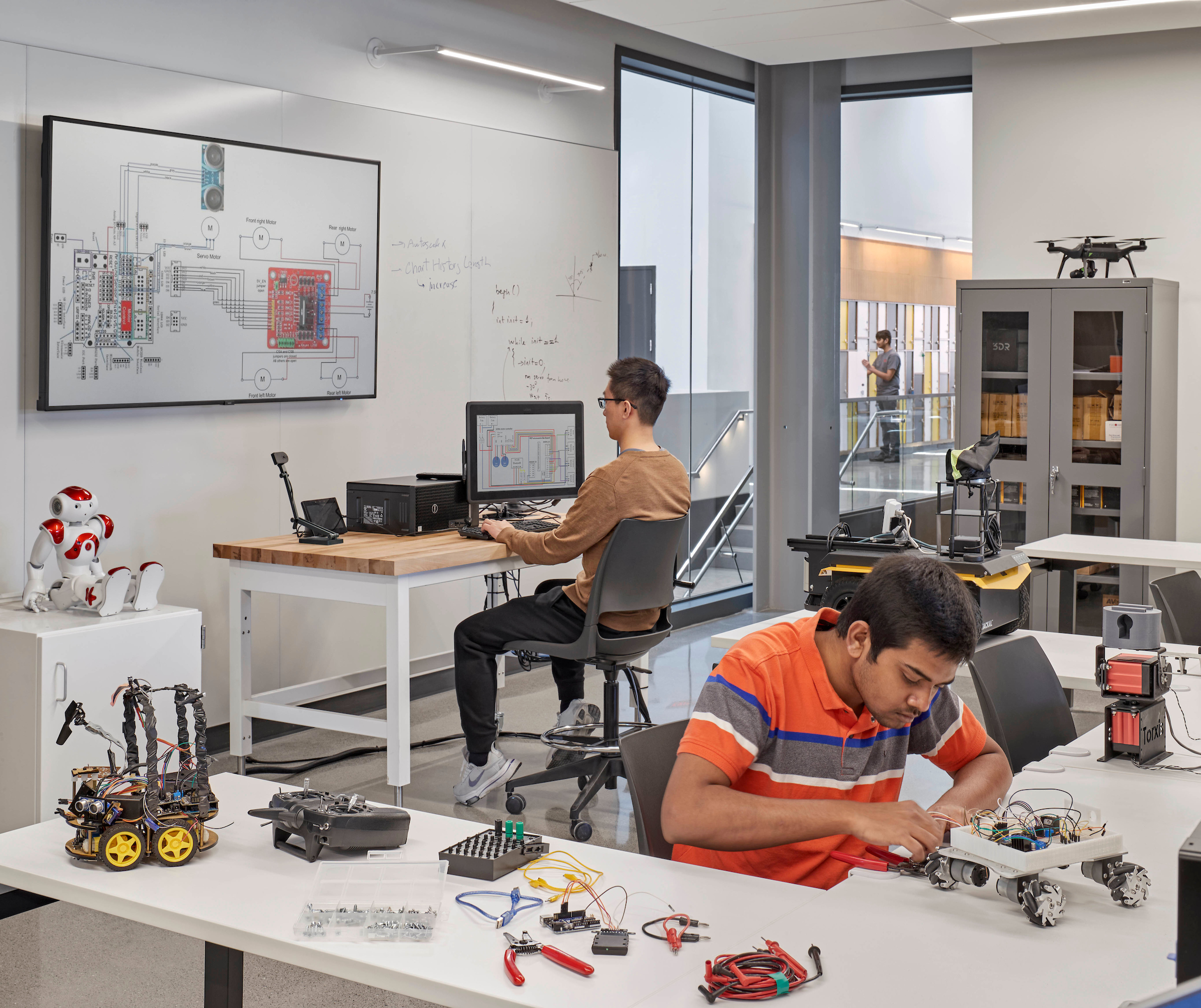
students working in maker space

Moving Forward, Together.

How you can make an impact: 
  • Give: Your support fuels innovation, student success, and the continued growth of our campus.
  • Volunteer: Share your time and expertise to strengthen programs, mentor students, and support key initiatives.
  • Career and Professional Development: Partner with us to provide internships, career opportunities, and real-world learning experiences for our students.
  • Share Your Thoughts: We welcome your ideas, feedback, and questions as we move forward together.