
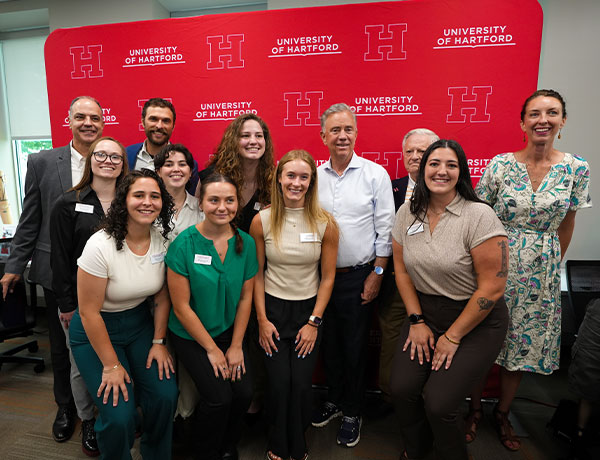
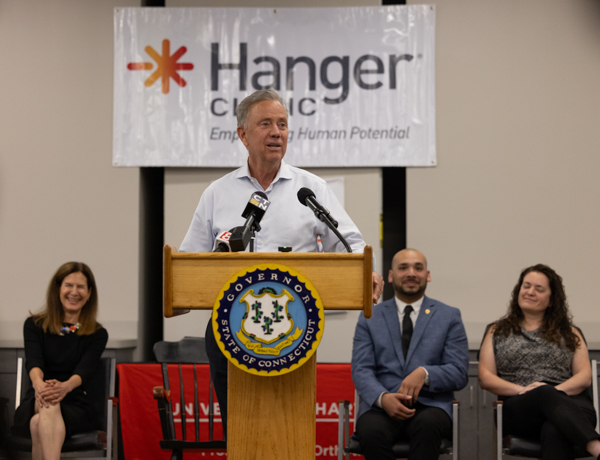
Their efforts paid off when Governor Ned Lamont signed the bill into law at the joint University of Hartford/Hanger Clinic health care facility in Rocky Hill. The new law ensures that children and adults with limb loss or limb difference have greater access to specialized prosthetic devices designed for activities such as running, cycling, swimming, and other forms of physical activity. By recognizing that one prosthesis cannot meet every need, the legislation removes barriers to mobility, independence, and overall quality of life.
“The most amazing technology in the world doesn’t make a difference if you don’t have access to it,” Lamont said.
The governor saw some of that technology up close when he took a tour of the Rocky Hill facility, which combines state-of-the-art prosthetic fabrication, classroom instruction, and hands-on patient care. As the new home of UHart’s master’s degree program in prosthetics and orthotics, the facility exposes students to a patient care environment and allows them access to industry experts through UHart’s long partnership with the Hanger Clinic.
The bill signing marked the culmination of months of advocacy led in part by faculty and students in the College of Education, Nursing and Health Professions. They met with legislators at the state capitol in Hartford and hosted the Lieutenant Governor on campus earlier this year.
Among those spearheading the effort was Lindi Mitsou, clinical/applied associate professor in UHart's master of science in prosthetics and orthotics program and co-leader of Connecticut's So Every BODY Can Move coalition.
Lindi Mitsou, Clinical/Applied Associate Professor of Prosthetics and OrthoticsAs faculty in the prosthetics and orthotics program, it is both my duty and privilege to educate students on topics that will directly impact their professional careers. Exposing students early to the policy issues affecting their patients’ quality of life fosters compassionate care and equips them to advocate effectively on their behalf.
"As faculty in the prosthetics and orthotics program, it is both my duty and privilege to educate students on topics that will directly impact their professional careers,” said Mitsou. “Exposing students early to the policy issues affecting their patients’ quality of life fosters compassionate care and equips them to advocate effectively on their behalf.”
For students, the bill signing was a firsthand look at how clinical expertise, patient advocacy, and public policy can improve health care. “We are entering the field during an exciting time where the prosthetic patient population is experiencing positive changes which will allow them to live more fulfilling and healthier lifestyles,” said Makenna Lord ’27. “Being able to provide our future patients with insurance covered secondary prostheses for recreational activities will be life changing for many.”
In his remarks, Lamont praised the team effort that spurred lawmakers to action. He put it simply: “To all the advocates who are here—your voice makes a difference, and we listen.”