Apply
College of Arts and Sciences

Bachelor of Arts in Sociology

At a Glance

Our program sets you up for a wide range of careers by tackling the biggest social issues of our time. With its broad focus, sociology connects to everything from research and theory to law and social change.

Full Time
Rolling Admission

Degrees Offered

Total Credits

Bachelor of Arts

36

Minor

15

Overview
You, making a difference.

In sociology, you’ll dig into real-world topics like inequality, race relations, health care, gender, and family life today. You’ll learn how society works—and how you can help make it better.

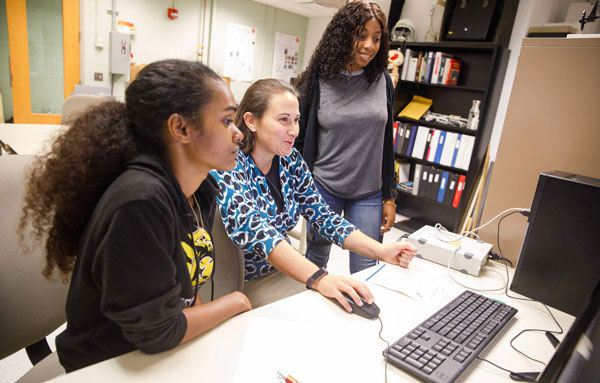
You’ll also get plenty of hands-on experience through UHart’s Center for Social Research or an internship in a public school, shelter, probation office, or nonprofit. It’s a great way to connect what you’re learning in class to the real world. With a sociology major, you develop skills in cultural competence, data analysis, and critical thinking and address the most pressing issues of our time and prepare for a wide range of careers

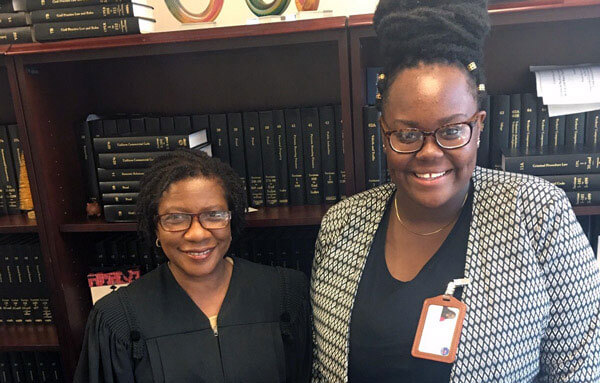
The Department of Sociology and Criminal Justice allowed me to take courses that sharpened my reading, writing, and research skills that I used throughout law school.

Courtney Hyman '20, Staff Attorney, Community Legal Aid’s Family Law Unit, Northampton, Massachusetts

Define Your Direction

Diversity, Equity, and Inclusion and Social Justice

Build real-world experience through internships with organizations such as the Women’s Advancement Initiative, Urban Institute, Habitat for Humanity, or True Colors United. Students have also interned with lawyers, lobbying firms, and the Connecticut Judicial Branch. This leads to careers in law and pre-law, human resources, DEI jobs in higher education and corporations, and advocacy and research work.

Social Work and Social Policy

Put your learning into action through internships with organizations such as United Way, the Department of Child and Family Services, local school districts, Boards of Education, and private social work practices. You can prepare for a career as a case manager or social worker at non-profit organizations focused on housing, immigration, medicine, education, and crime; community outreach and organizing; or as an analyst for government and corporate agencies.

Degree Requirements

You must complete 36 course credits You’ll explore a mix of core classes and electives, culminating in a hands-on senior capstone experience.
18 Course Credits 

You take four required courses, plus a senior practicum where you put your skills into action. In the senior weekly seminar, you’ll link theory to practice, conduct field observations, and complete a final sociological project. With faculty support, you’ll also spend eight hours each week working in a local agency or organization—building experience that sets you apart.

Courses include:

  • Introduction to Sociology

  • Methods of Social Research

  • Sociological Theory

  • Statistical Analysis

  • Senior Practicum

For more information, and to see a complete list of course offerings, visit the Course Catalog.

18 Course Credits
You select six additional courses. Three must come from 300-level or 400-level courses. Examples include:

  • Sociology of the Family
  • Deviance
  • Popular Culture
  • Sociology of Health and Illness
  • Social Relations
  • Political Sociology

For more information, and to see a complete list of electives, visit the Course Catalog.
15 Course Credits 
Pair your major with a minor in sociology. You’ll learn to analyze social trends, understand diverse perspectives, and address real-world challenges—skills that are in high demand across fields like education, business, healthcare, law, and public service. 

You take Introduction to Sociology and select two additional courses. Examples include:

  • Contemporary Social Issues
  • Society and the Individual
  • Urban Sociology

For more information, and to see a complete listing of minor requirements, visit the Course Catalog.
Bachelor of Arts in sociology students will:

  • Demonstrate understanding of the role of sociological theory in sociological inquiry and analysis.
  • Synthesize the learning objectives and content knowledge developed in core and foundation level courses.
  • Develop a "sociological imagination" and an ability to apply a sociological perspective to experiences, tasks, and activities beyond the university setting.
  • Demonstrate knowledge of the steps of sociological research and understand the relative advantages of different methodologies.
  • Demonstrate an understanding of how the nature of social data determines the best statistical procedures, then describe the assumptions necessary for the procedures, how to request them in SPSS, and how to write a good report based upon the SPSS output.

Meet Your Faculty

Kevin Beck
Associate Professor; A&S Honors Coordinator
Sociology and Criminal Justice

View Full Profile
Janice Calvi-Ruimerman
Adjunct Faculty
Sociology and Criminal Justice

View Full Profile
Lisa Cato-Scott
Adjunct Faculty
Sociology and Criminal Justice

View Full Profile
Albert DiChiara
Associate Professor
Sociology and Criminal Justice

View Full Profile
Amanda Freeman
Associate Professor
Sociology and Criminal Justice

View Full Profile
Philip Levchak
Department Chair, Sociology and Criminal Justice; Associate Professor of Sociology and Criminal Justice
Sociology and Criminal Justice

View Full Profile
Kelly McGeever
Associate Dean of Student Academic Services; Exploratory Pathways Coordinator; Associate Professor
Dean's Office for A & S
Sociology and Criminal Justice

View Full Profile
Keven Mcneil
Adjunct Faculty
Sociology and Criminal Justice

View Full Profile
Herbert Symmes
Adjunct Faculty
Sociology and Criminal Justice

View Full Profile
Wesley Younts
Director of the Center for Social Research; Associate Professor
Sociology and Criminal Justice
Center for Social Research

View Full Profile
Cindy A. Oppenheimer
Office Coordinator
Sociology and Criminal Justice
Politics, Economics, and International Studies
History and Philosophy

View Full Profile

Similar Programs

Students Working

Criminal Justice

If you’re drawn to law enforcement, shaping policy, or helping communities thrive, UHart has a path for you. Explore our Criminal Justice major and start building a career that matters.

Ready to learn beyond the classroom with the College of Arts and Sciences?